Use argument based on empirical evidence and scientific reasoning to support an… | Students use real evidence to explain how animal behaviors (like migration or courtship) and plant structures (like flowers or fruit) make reproduction more likely to succeed. | 5.8.1 |
Construct a scientific explanation based on evidence for how environmental and… | Students explain why two plants or animals of the same species can grow differently, using evidence that points to genes, sunlight, food, or other environmental factors as the cause. | 5.8.2 |
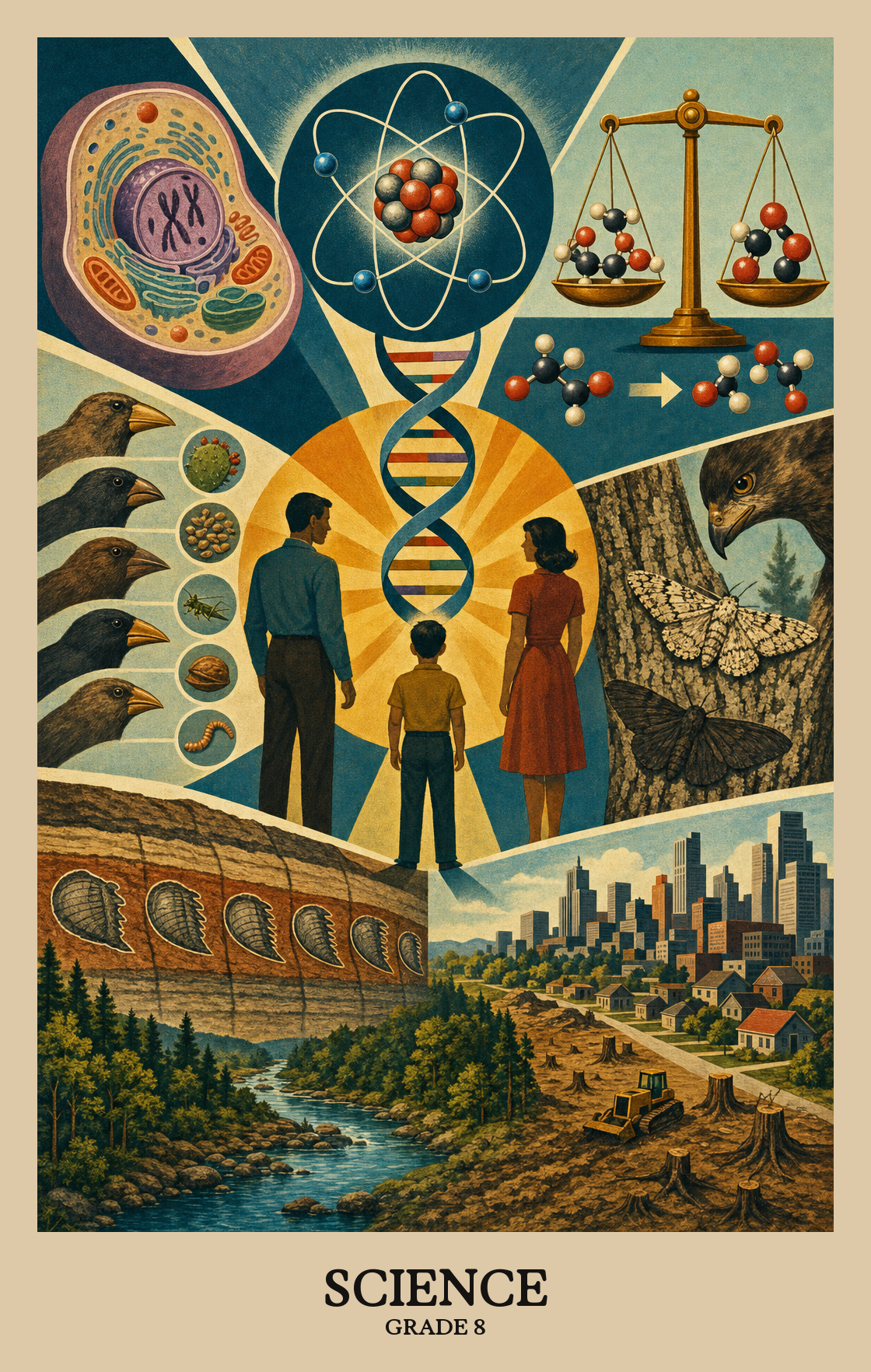
Develop and use a model to describe why structural changes to genes | A mutation is a change in a gene's instructions. Students model how that change can alter the protein a gene builds, which may harm the organism, help it survive better, or make no difference at all. | 5.8.3 |
Develop and use a model to describe why asexual reproduction results in… | Students model and explain why offspring from asexual reproduction are genetic copies of the parent, while offspring from sexual reproduction inherit a mix of genes from two parents. That mix is why siblings can look different from each other. | 5.8.4 |
Gather and synthesize information about the technologies that have changed the… | Students research technologies like selective breeding and genetic engineering that let humans shape which traits animals or crops pass down to offspring. The focus is on how those tools have changed over time and what they make possible now. | 5.8.5 |
Analyze and interpret data for patterns in the fossil record that document the… | Fossils tell a long story. Students read that record to find patterns in how life has changed, appeared, and disappeared over time, using the same rules of nature that work today. | 5.8.6 |
Apply scientific ideas to construct an explanation for the anatomical… | Students compare body structures across living and extinct species to figure out how closely related those species are. A fish fin, a bird wing, and a human arm, for example, share the same underlying bones because they all descend from a common ancestor. | 5.8.7 |
Analyze displays of pictorial data to compare patterns of similarities in the… | Students compare drawings of animal embryos at early stages of development to find clues about how species are related. A fish, a bird, and a human embryo can look nearly identical early on, even though the adults look nothing alike. | 5.8.8 |
Construct an explanation based on evidence that describes how genetic… | Some individuals in a population are born with slight differences in their traits. Those differences can make it easier or harder to survive and have offspring, and over time the helpful traits show up more often in the population. | 5.8.9 |
Use mathematical models, probability statements | Students use ratios, percentages, and probability to explain why certain traits become more or less common in a population across generations. The math shows how natural selection shifts what a group of organisms looks like over time. | 5.8.10 |