Rules at home and school
Students start the year by noticing the rules around them. They talk about why classrooms, families, and playgrounds have rules, and what happens when people follow them or break them.
First grade is the year students start to see themselves as part of a group with rules. They learn that every person has rights, like being treated fairly, and responsibilities, like taking turns and helping at home or school. Students talk about real situations in their classroom and community, then back up their ideas with reasons. By spring, they can explain a classroom rule and tell why it matters.
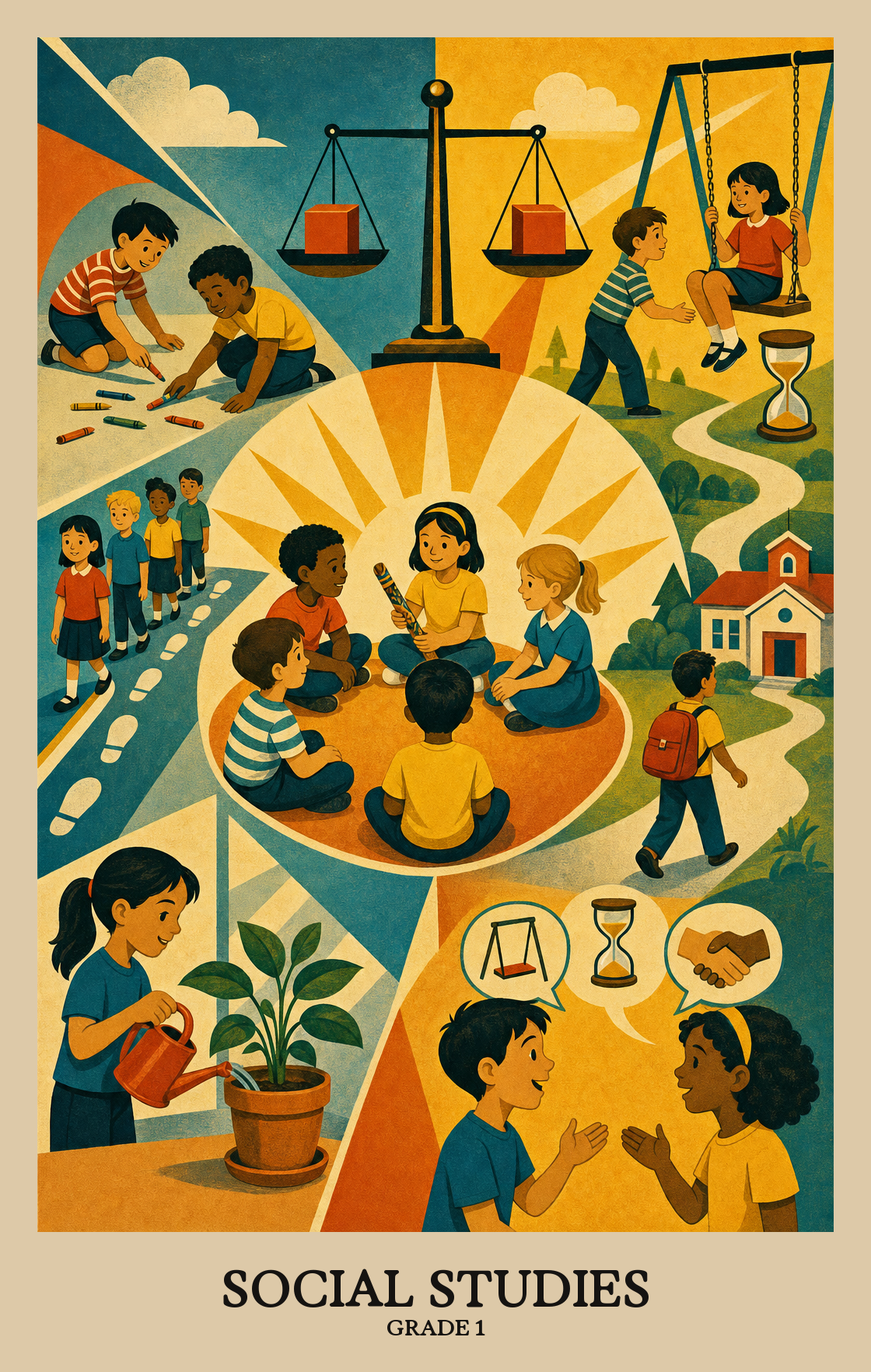
Students start the year by noticing the rules around them. They talk about why classrooms, families, and playgrounds have rules, and what happens when people follow them or break them.
Students learn the difference between something they get to do and something they are expected to do. They begin to see that every person in a group has both.
Students dig into stories and real situations where people have to share, take turns, or speak up. They practice explaining what is fair and giving a reason for their thinking.
Students connect what they have learned to problems they see in their own school or neighborhood. They make a small claim about what should change and back it up with examples they have noticed.
Rights are things students are allowed to do or have, like speaking up or going to school. Responsibilities are things they are expected to do, like following rules and treating others fairly.
Students learn that living in a community means having both rights (things you're allowed to do) and responsibilities (things you're expected to do). They look at examples and decide whether each one is a right, a responsibility, or both.
Students look at real examples (a classroom rule, a lunch line, a playground disagreement) and explain why a right or a responsibility exists and what happens when people follow it or ignore it.
Students look at a real problem in their community or the news and connect it to a right someone has or a responsibility someone should meet.
Students pick a rule or right they believe in, then explain why using facts or examples. This is early practice in backing up an opinion with a reason.
| Standard | Definition | Code |
|---|---|---|
| Individuals have rights and responsibilities | Rights are things students are allowed to do or have, like speaking up or going to school. Responsibilities are things they are expected to do, like following rules and treating others fairly. | 1.2 |
| The student will recognize and evaluate the rights and responsibilities of… | Students learn that living in a community means having both rights (things you're allowed to do) and responsibilities (things you're expected to do). They look at examples and decide whether each one is a right, a responsibility, or both. | 1.2.1 |
| The student will analyze the context and draw conclusions about rights and… | Students look at real examples (a classroom rule, a lunch line, a playground disagreement) and explain why a right or a responsibility exists and what happens when people follow it or ignore it. | 1.2.2 |
| The student will investigate and connect the rights and responsibilities of… | Students look at a real problem in their community or the news and connect it to a right someone has or a responsibility someone should meet. | 1.2.3 |
| The student will use their understanding of rights and responsibilities to make… | Students pick a rule or right they believe in, then explain why using facts or examples. This is early practice in backing up an opinion with a reason. | 1.2.4 |
Federally administered sample-based assessment in reading, mathematics, science, writing, and other subjects. NAEP results inform state-by-state comparisons rather than individual student or school accountability.
The year focuses on rights and responsibilities. Students learn what people are allowed to do, what they are expected to do, and how those ideas show up at home, at school, and in their neighborhood.
Point them out as they come up. A right might be having a safe place to sleep or a turn to speak at dinner. A responsibility might be feeding the dog or putting shoes away. Naming these out loud helps the ideas stick.
Students can name a few rights and responsibilities, explain why they matter, and back up an opinion with a reason. A first grader might say a classmate has a right to be heard because everyone takes turns talking.
Start close to home with rules and jobs in the classroom. Move out to the school, then the neighborhood, then the wider community. Save the make-a-claim work for spring once students have plenty of examples to draw on.
Yes, and it is a good opening. Ask which rule, why it feels unfair, and what would be better. That is the same thinking the standards ask for: looking at a situation and giving a reason for an opinion.
Telling the difference between a right and a responsibility trips students up all year. Sorting activities with real classroom examples help more than definitions. Revisit the distinction often instead of teaching it once in a unit.
They should be able to give an example of a right, give an example of a responsibility, and explain why a rule exists. If they can argue a small point with one reason, such as why sharing matters, they are in good shape.
Stick with things first graders see and feel: fairness on the playground, taking care of shared spaces, helping a neighbor, voting on a class decision. Heavier civic topics can wait. The goal is connecting the ideas to real life, not current events coverage.