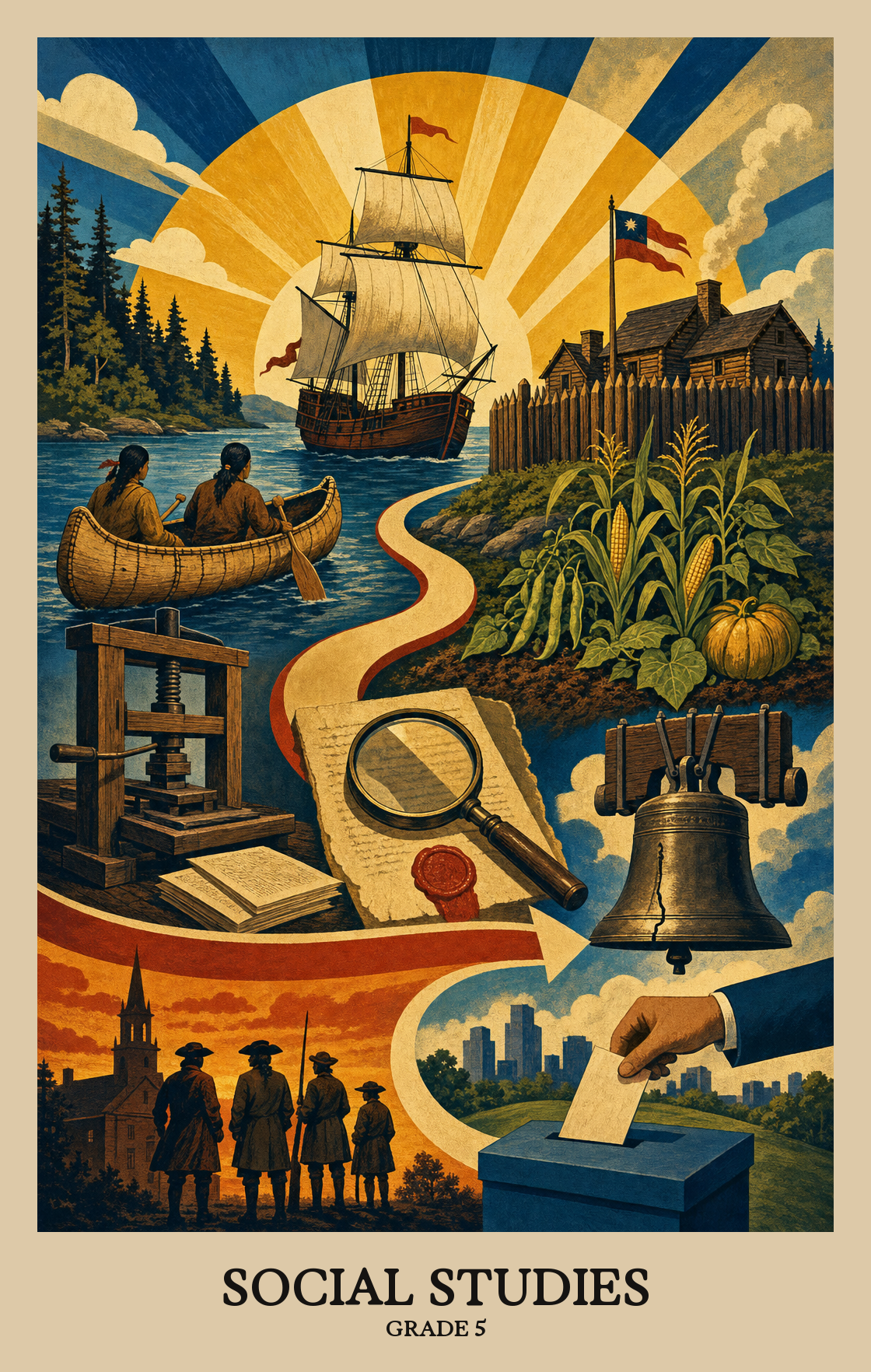
Choices have consequences | Students learn that every decision, big or small, leads to real outcomes. They look at choices made in early American history and trace what happened next. | 5.1 |
The student will recognize and evaluate significant choices and consequences… | Students look at real decisions made by people in early American history and weigh what happened as a result. The focus is on how those choices, made hundreds of years ago, still shape life in the United States today. | 5.1.1 |
The student will analyze the context and draw conclusions about choices and… | Students look at a historical event, figure out why people made the choices they did, and explain what happened as a result. The focus is on cause and effect in real decisions from American history. | 5.1.2 |
The student will investigate and connect examples of choices and consequences… | Students look at real decisions made in early American history and trace what happened as a result, then connect those cause-and-effect patterns to problems and debates happening in the world today. | 5.1.3 |
The student will use their understanding of choices and consequences to make a… | Students pick a historical event, take a position on why it mattered, and back that position up with facts and details from what they've learned. | 5.1.4 |
Individuals have rights and responsibilities | Students learn that personal freedoms come with duties to others. They explore how rights like free speech or fair treatment connect to responsibilities like following laws and participating in the community. | 5.2 |
The student will recognize and evaluate the rights and responsibilities of… | Students look at what it means to live in a community: what protections people are entitled to and what they owe each other in return. They think about how rights and responsibilities work together in everyday life. | 5.2.1 |
The student will analyze the context and draw conclusions about rights and… | Students read historical situations and decide what rights people had and what responsibilities came with them. They practice making reasoned judgments about why those rights and duties mattered. | 5.2.2 |
The student will investigate and connect the rights and responsibilities of… | Students look at a real issue happening today and connect it to the rights and responsibilities Americans have. They explain how those rights shape what people can do, and what responsibilities come with them. | 5.2.3 |
The student will use their understanding of rights and responsibilities to make… | Students read about rights and responsibilities in early American history, then write a clear argument backed by evidence. The goal is to take a position and support it, not just summarize what happened. | 5.2.4 |
Societies are shaped by the identities, beliefs | People, families, and communities leave their mark on a society through their beliefs, traditions, and daily choices. Students explore how different groups shaped early American life. | 5.3 |
The student will recognize and evaluate how societies are shaped by the… | Societies look the way they do because of who lived in them. Students examine how the beliefs, customs, and actions of different groups shaped early American life. | 5.3.1 |
The student will analyze context and draw conclusions about how societies are… | Students read about a historical group or person and explain how their beliefs and actions shaped the society around them. | 5.3.2 |
The student will investigate and connect how societies are shaped by the… | Students look at the values and traditions of people from early American history and trace how those ideas still show up in news, politics, and everyday life today. | 5.3.3 |
The student will use their understanding of how societies are shaped by the… | Students pick a moment in early American history and argue why it mattered, backing their case with evidence from what real people believed, decided, or did. | 5.3.4 |
Societies experience continuity and change over time | History shows what stays the same across generations and what shifts. Students trace how American life, government, and culture changed from the country's earliest days through 1800, and why some things stayed the same. | 5.4 |
The student will recognize and evaluate continuity and change over time | History doesn't stay the same, and it doesn't change all at once. Students look at events across time to spot what stayed the same, what shifted, and why it matters for understanding how the United States took shape. | 5.4.1 |
The student will analyze the context and draw conclusions about continuity and… | Students look at how life in early America stayed the same or shifted over time, then explain what caused those changes. They practice making a case with evidence, not just describing what happened. | 5.4.2 |
The student will investigate and connect continuity and change to a… | Students look at a problem in the news today and trace it back to patterns from early American history, explaining what has stayed the same and what has shifted over time. | 5.4.3 |
The student will use their understanding of continuity and change to make a… | Students take a position on how something in early American history changed or stayed the same, then back it up with facts from what they have read or studied. | 5.4.4 |
Relationships among people, places, ideas | People, places, and ideas keep changing each other over time. Students explore how events in early American history shifted where people lived, what they believed, and how they treated the land and one another. | 5.5 |
The student will recognize and evaluate dynamic relationships that impact lives… | Students look at how changes in one place (a new law, a drought, a war) ripple outward and affect people in other communities and across the country. | 5.5.1 |
The student will analyze the context and draw conclusions about dynamic… | Students look at a moment in history and explain why things changed: why people moved, why conflicts started, or how a new idea shifted the way communities lived. | 5.5.2 |
The student will investigate and connect dynamic relationships to contemporary… | Students trace how a historical event, place, or idea from early American history connects to something happening in the world today. They build the habit of asking: how did we get here? | 5.5.3 |
The student will use their understanding of dynamic relationships to make a… | Students pick a position about a historical event or person and back it up with facts from what they've read or studied. The focus is on building a real argument, not just summarizing what happened. | 5.5.4 |