Organize, represent, and interpret data with up to four categories.<ul><li>Draw… | Students collect data into up to four groups, then draw a picture graph or bar graph to show the results. From that graph, they answer questions by adding or comparing the amounts in each group. | NC.2.MD.10 |
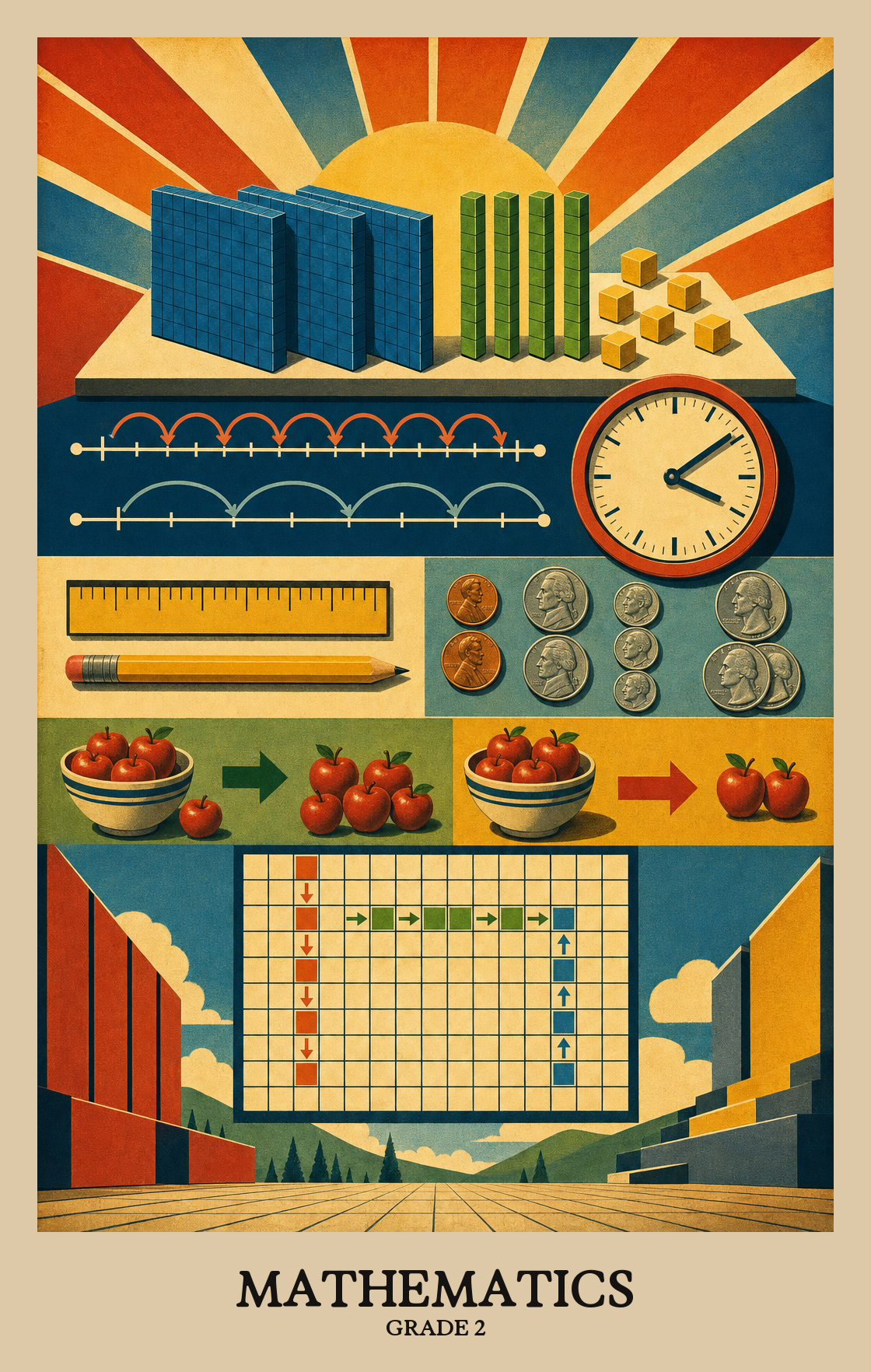
Measure the length of an object in standard units by selecting and using… | Students pick the right measuring tool for the job and use it to find how long something is. A small crayon calls for a ruler; a longer object might need a yardstick or measuring tape. | NC.2.MD.1 |
Measure the length of an object twice, using length units of different lengths… | Students measure the same object twice using two different tools, like a paperclip and a ruler, then explain why the two numbers came out different. Bigger units give smaller counts; smaller units give bigger counts. | NC.2.MD.2 |
Estimate lengths in using standard units of inches, feet, yards, centimeters | Students guess how long something is before measuring it, using units like inches, feet, yards, centimeters, and meters. The goal is building a feel for size so the measurement makes sense. | NC.2.MD.3 |
Measure to determine how much longer one object is than another, expressing the… | Students measure two objects with a ruler, then subtract to find the difference. They say the result in inches or centimeters, not just "this one is bigger." | NC.2.MD.4 |
Use addition and subtraction, within 100, to solve word problems involving… | Students solve word problems about lengths by adding or subtracting measurements in the same unit. They write equations with a missing number, like 45 + ? = 72 cm, to find the answer. | NC.2.MD.5 |
Represent whole numbers as lengths from 0 on a number line diagram with equally… | Students place whole numbers on a number line, then use it to add and subtract. Jumping forward shows addition; jumping back shows subtraction. All answers stay within 100. | NC.2.MD.6 |
Tell and write time from analog and digital clocks to the nearest five minutes… | Students read both analog and digital clocks and write the time to the nearest five minutes. They also use a.m. and p.m. to show whether a time falls in the morning or afternoon. | NC.2.MD.7 |
Solve word problems involving:<ul><li>Quarters, dimes, nickels | Students add up coins like quarters, dimes, nickels, and pennies to solve simple money problems. They write the answer using the cent or dollar sign correctly. | NC.2.MD.8 |