Getting to know the classroom
Students settle into school and notice that what they do affects how the day goes. They start spotting simple cause and effect, like how raising a hand changes what happens next.
This is the year students learn that every choice leads to something. Through stories, classroom routines, and simple group discussions, students start noticing what happens after a decision gets made. They practice explaining why someone picked one option over another and what came next. By spring, students can listen to a short story or look at a picture and tell you what choice was made and what happened because of it.
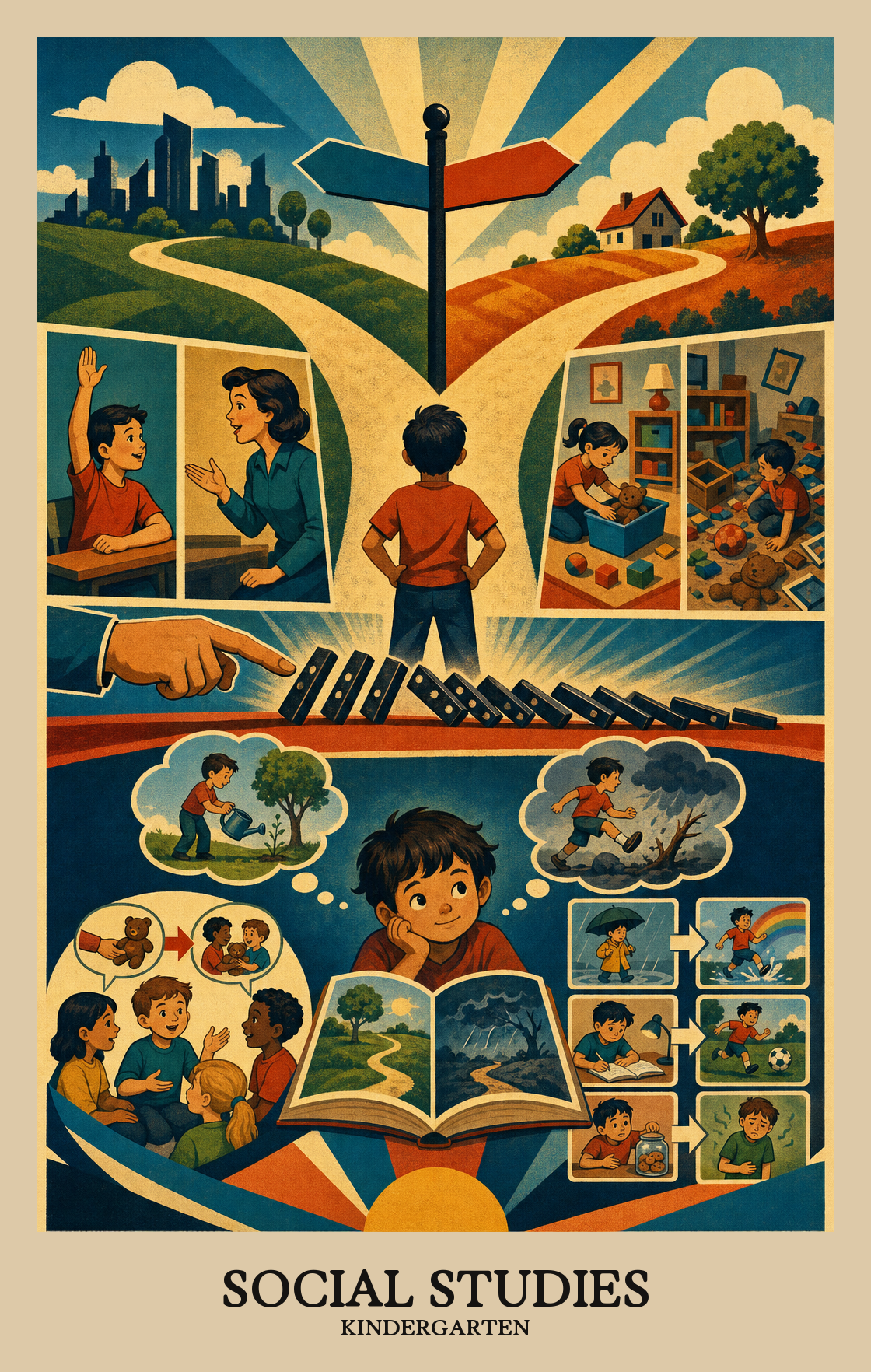
Students settle into school and notice that what they do affects how the day goes. They start spotting simple cause and effect, like how raising a hand changes what happens next.
Students look at small daily decisions, such as sharing a toy or waiting in line, and talk about what happens after each one. They begin to explain why a choice turned out the way it did.
Using picture books and short stories, students study choices characters make and link them to real situations they see around them. They compare a choice in a story to something happening in their own community.
Students practice picking a side on a simple question and giving a reason for it. By the end of the year, they can share a short opinion and point to something that backs it up.
Making a choice leads to a result, good or bad. Students learn to think about what might happen before they decide.
Students look at real choices people made in the past and talk about what happened next. They start to see that decisions, big or small, can change things for everyone.
Students look at a situation and figure out what happens next based on the choices people make. They practice connecting a decision to its result.
Students look at real-life situations and talk about what happened because of a choice someone made. They connect those cause-and-effect pairs to things happening in the world today.
Students pick a simple decision (like sharing a toy or skipping cleanup) and explain what happens next. They back up their thinking with a reason, practicing the habit of connecting choices to consequences.
| Standard | Definition | Code |
|---|---|---|
| Choices have consequences | Making a choice leads to a result, good or bad. Students learn to think about what might happen before they decide. | K.1 |
| The student will recognize and evaluate significant choices and consequences… | Students look at real choices people made in the past and talk about what happened next. They start to see that decisions, big or small, can change things for everyone. | K.1.1 |
| The student will analyze the context and draw conclusions about choices and… | Students look at a situation and figure out what happens next based on the choices people make. They practice connecting a decision to its result. | K.1.2 |
| The student will investigate and connect examples of choices and consequences… | Students look at real-life situations and talk about what happened because of a choice someone made. They connect those cause-and-effect pairs to things happening in the world today. | K.1.3 |
| The student will use their understanding of choices and consequences to make a… | Students pick a simple decision (like sharing a toy or skipping cleanup) and explain what happens next. They back up their thinking with a reason, practicing the habit of connecting choices to consequences. | K.1.4 |
Federally administered sample-based assessment in reading, mathematics, science, writing, and other subjects. NAEP results inform state-by-state comparisons rather than individual student or school accountability.
Most of the year is about choices and what happens because of them. Students talk about choices people make at home, at school, and in stories, and they notice the results. The work is mostly conversation, drawing, and acting things out, not reading or writing reports.
Talk out loud about small choices during the day. When picking a snack, sharing a toy, or putting on a coat, ask what might happen next and why. Five minutes of this kind of talk at dinner or in the car goes a long way.
Students should be able to name a choice someone made, say what happened because of it, and decide if it was a good idea. They should also be able to give a simple reason for their opinion, like why sharing helped a friend feel better.
Start with choices students know from their own day, like what to wear or how to treat a friend. Move to choices in read-alouds and classroom routines, then to choices people make in the community. Save claim-and-evidence work for late in the year once students are used to giving reasons.
No. Almost everything happens through pictures, stories read aloud, and talking. Asking questions about characters in books read at home builds the same thinking skills used in class.
The jump from naming a choice to explaining the consequence is the sticky one. Students often say what happened but not why one led to the other. Sentence stems like "She chose to ___, so ___" help a lot during read-alouds and morning meeting.
Listen for cause and effect in everyday talk. A ready student can describe a choice from a story or from their day, say what happened next, and share an opinion with a reason. If that thinking shows up in regular conversation, they are in good shape.